
Former Tradwife Tells All: The Interview
Ever since I started going viral as a tradwife, I’ve been contacted over and over again by journalists for an interview. I’ve turned almost all of them down. Today, I’m finally answering their questions – but my way, on my own platform.
Though we still live a fairly traditional life, I’m no longer a tradwife, and this is my farewell to the label. Here’s what I actually think – not curated, not edited with a journalist’s slant. Just me.
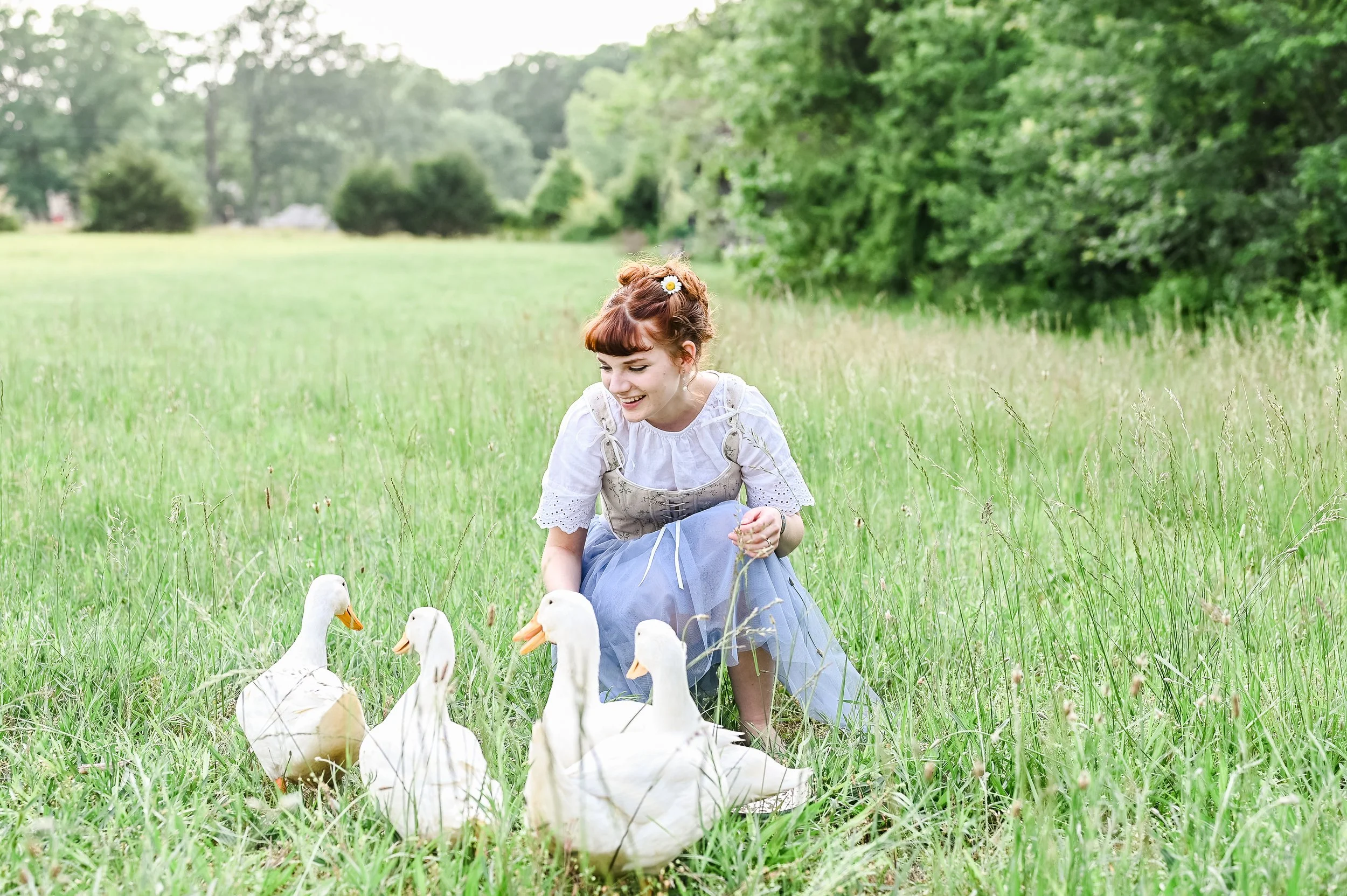
Would you consider yourself a trad wife?
I am not a tradwife anymore. I’ve chosen to leave that label and movement – you can read more about that here.
What are your thoughts on people who argue that being financially dependent on a man could potentially backfire?
I agree with that! I’m a huge proponent of marrying wisely – but even if you marry the best man in the world, he will eventually die. It’s a reality! And for some that happens sooner than later. You need to be prepared for when that happens, and making your own income is one way – but only one – to do that. There are many other backups you can put into place to prepare for this scenario. Trusting the Lord to provide needs to be paired with making responsible choices. I have a video series about this on my Instagram page, but I’m considering making it a blog series as well.
Why do you think the trad wife lifestyle is so compelling to young women today? Balancing a career, raising children, and paying high childcare costs is a major challenge for families. How much do you think that adds to the appeal of SAHM content creators like you? What else is going on in society that makes this type of life so appealing?
Balancing a career and raising children is HARD! Especially if you have multiple children and work outside the home. I can’t tell you how many women I’ve come across on social media trying to make income from home so they don’t have to send their kids to daycare. Unfortunately, rising costs of living are making it nearly impossible for most to live on one income – I’ve seen that in my own life as we are making far more than we used to six years ago, but life feels just as tight. Many are also wanting to slow down, give their children a slower, unplugged childhood, and be more present with their children than their parents were with them.
Do you encounter any misconceptions or stereotypes about traditional wives, and if so, how do you address them?
My biggest misconception/stereotype was that tradwives don’t work – it’s not traditional to work or make your own money, which is false and I have gone into that in detail in this post.
Did you grow up in a family that embraced those traditional values, or did you become a trad wife at a later stage in life? If so, how did your surroundings react?
So, in my family, my mom was a SAHM until my dad needed her help, and she started working full time with him when I was about 5. She went back to being a SAHM when I was 12, while doing some part time work for my dad and starting an herbal medicinals business. My grandmother has always been a SAHM. Their marriages are also traditional. I just grew up seeing it as normal! However, I always was entrepreneurial and starting businesses and that was also encouraged. I never had a hard and fast “I’m a tradwife now!” moment, and my family has always been supportive.
You married at 18, which some people might see as young these days. Looking back, what made you so certain about that decision at that age?
I already had a blossoming career in wedding photography that was going well, and I had no desire to move out and live on my own before marriage, as well as a lifelong desire to be married. It was the next step in my life plan, if that makes sense.
Every couple develops their own rhythm — what does the division of responsibilities look like in your home? Are there specific duties or routines you’ve taken on as part of your homemaking role?
We do still have fairly blue/pink responsibilities; for example, we both work, and then when it comes to household responsibilities, I handle most of the housework (cooking, cleaning, laundry, etc) and he handles most of the outdoor projects (gardening, property management, home repair, car maintenance) as well as the administrative (taxes, government filing) and we both handle finances. We work together once a week to reset the house. We divide these up based on natural strengths and weaknesses – but also believe it’s important we both know how to do each other’s tasks to a point. He can cook and clean, and I know how to garden and check the oil in the cars, do basic home improvement.
A lot of people focus on the word “submission.” What does that word actually mean within your marriage, and how does it play out day to day?
A friend once astutely described biblical submission as this: the husband is the captain of the ship, and the wife is the first mate. A wise captain often consults the first mate, and the first mate needs to be able to take over for the captain if need be. A family is a ship. It is going somewhere, it needs leading and direction. My husband and I discuss every big decision together, he takes my input and uses that as he makes a final call. He asks for my input for a lot of decisions that he doesn’t have to, like with his own business. We are each other’s best friends and want to see each other succeed as well as be united.
Do you oppose the principles of gender equality? If so, why?
I believe men and women are equally valuable and loved by God but I do not believe they are the same, or interchangeable. Society today has made men and women seem like they should be interchangeable – and now there is a lack of beautiful uniqueness of genders. I do oppose gender equality – I believe in gender equity. Identical treatment is not always the fairest treatment. Men and women are fundamentally created differently and have different roles, strengths, and weaknesses.
You often show homemaking as aesthetic, peaceful, and curated. Do you ever feel pressure to maintain that image?
I don’t feel pressure, no! I’ve also actively shown the hard and messy parts of homemaking -like when I was pregnant and had HG. It’s important to me to show real life, but also find the joy and beauty in real life.
Thanks for reading and following along!