
Tradwives aren’t supposed to work
DISCLAIMER: I no longer adhere to the tradwife label, due to reasons found here. However, I still think this is an important conversation that needs to be had considering the countless opposition I’ve had in response to my working. Women have always worked and been influential.
“You’re not a tradwife, you’re a social media influencer”, they say, as if the two are incompatible. This is one of the most common “gotcha” comments that people try to come at me with.
History, however, tells a different story.
While social media is relatively new, women sharing their ideas and thoughts with the world is not. And it wasn’t feminism that “allowed” women to do this, as women have been influential far before feminism was a thing.
Women who influenced
Let’s look at some of the women throughout history who have had platforms and shared their thoughts and ideas with many, effectively changing public opinion, and, history itself.
Note: This is purely informational. It doesn’t matter whether I agree or disagree with the ideas or the lifestyles of the women listed, they are here simply for historical context.
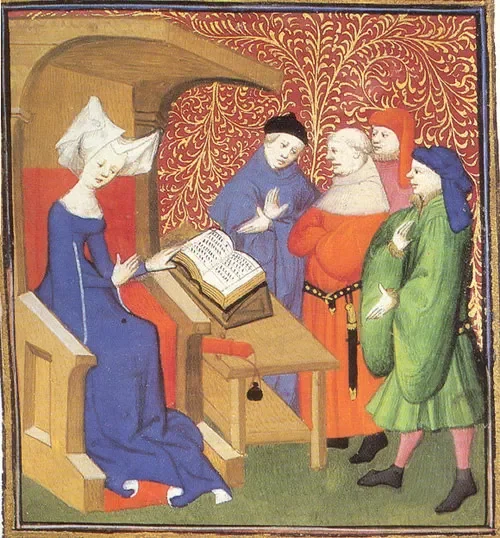
Christine de Pizan (1364-c.1430)
Christine was the first professional female writer in Europe. She turned to writing to support her family after her husband left her widowed with three children at just twenty-five years old. She was also caring for her niece and mother at that time. She began writing poetry to distract herself, and had enough work to publish her first book in 1393 at the age of twenty-nine. She went on to have ten more books published before her death. You could liken Christine to a Substack writer of today. :)
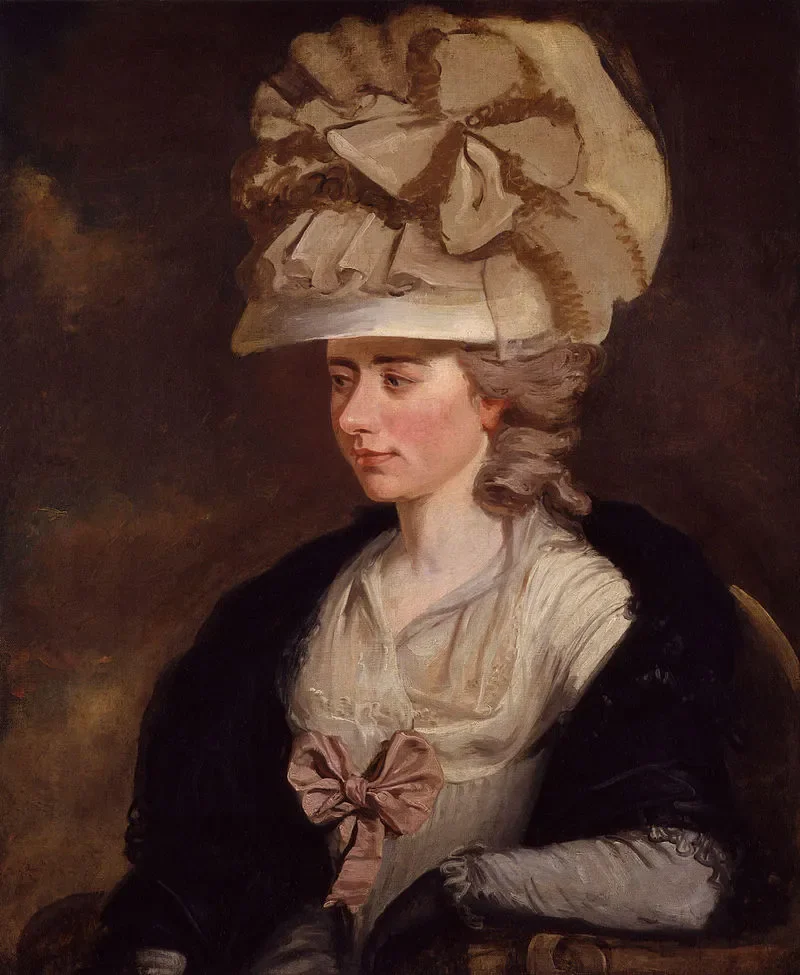
Fanny Burney ( 1752-1840)
Frances Burney was an English novelist, diarist, and playwright. She is best remembered for her first novel, Evelina (published 1778). Fanny began writing after her mother died when she was but ten years old. She was an influence on later novelists such as Jane Austen and William Makepeace Thackeray. Her work mostly centered on the observations of polite society, often satirizing it. Fanny was admired as a novelist, and at the age of thirty, was recognized by Queen Caroline and King George the III, who brought her into court as the “dresser” to the queen for four years. One random fact I found interesting about Fanny is she created the first detailed account of a mastectomy, as she had one without anesthesia and documented it! Fanny wasn’t radical, but her writings on domestic life made her famous.
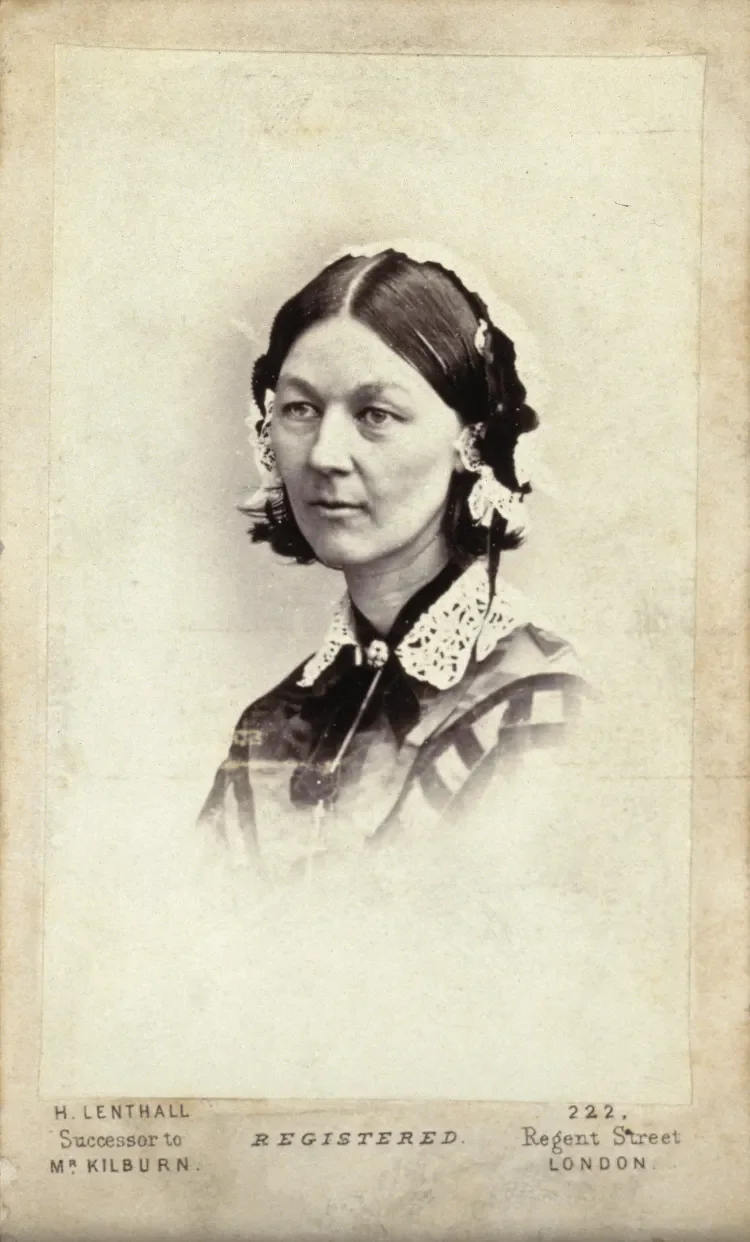
Florence Nightingale (1820-1910)
Florence Nightingale is known as the founder of modern nursing. Her work revolutionized medical practices and her advocacy for sanitation saved many lives. Despite the fact that nursing the sick was seen as one of the lowest possible professions, Florence pursued nursing with a passion. She believed she had received a calling from God to serve the sick. Florence studied nursing in Paris and in Germany and by the age of thirty-three, had already made a name for herself in the world of nursing. She became the manager and superintendent of a hospital in London, and during the Crimean war, was asked by the Secretary of State to manage a group of nurses that would treat the wounded soldiers. Florence's efforts brought the mortality rate in that hospital from 40 percent down to 2 percent! After the war, she continued to work on hospital reform and published a book as well as helped to set up the Army Medical College in Catham. Florence’s work had a huge impact. One could argue that it went viral. :)
This women are just three of the many influential and impactful women over time. If you’re interested in reading about more of them, here are a few others.
Hrotsvitha of Gandersheim (c. 935–1002) - she was a nun and playwright who celebrated virtue and female strength with moral storytelling.
Isotta Nogarola (1418–1466) - wrote philosophical works about faith and virtue.
Madame de Pompadaur (1721-1764) - she set the aesthetic tone for an entire era. Basically a lifestyle influencer.
Abigail Adams (1742-1818) - she shaped opinion through letters and influenced by example.
While it was not as common for women to have a platform, one could argue that is mainly due to technology. Today’s technology gives much wider access to influence, as 68.7% of the global population has internet access. 1.5 million Americans make a full-time living as content creators. The internet age has given remarkable access and revolutionized both the ability to work from home, as well as opened up options for influence. And that brings us right into our next topic:
Women who worked
Ah, to the question at hand. Is it traditional for women to work? I say yes, and this is why: women have never not worked. However, it was less common for women to leave the home to work, and not only women, but also men.
Before the industrial revolution, men and women largely worked from home. Families would have professions, and every member would have a part, whether large or small, in that business. In the countryside, many people would have or work on farms. Families worked together.
In the middle ages, peasant women were generally employed from home as well as caring for the home. Some trades that were common for women were weavers, finishers, candle makers, merchants of wax, and peddlers of used clothing. Some information leads to suggest that all spinning was done by women in Toulouse, France in the 1200s. In Montpellier, 20% of the apprenticeship contracts spanning from c.1300 to c.1400 concerned female apprentices!
Other common jobs for women outside of the home would be midwifery, innkeepers (unless they lived in the inn of course), and domestic servants.
Here are a few more notable women in particular who had jobs.
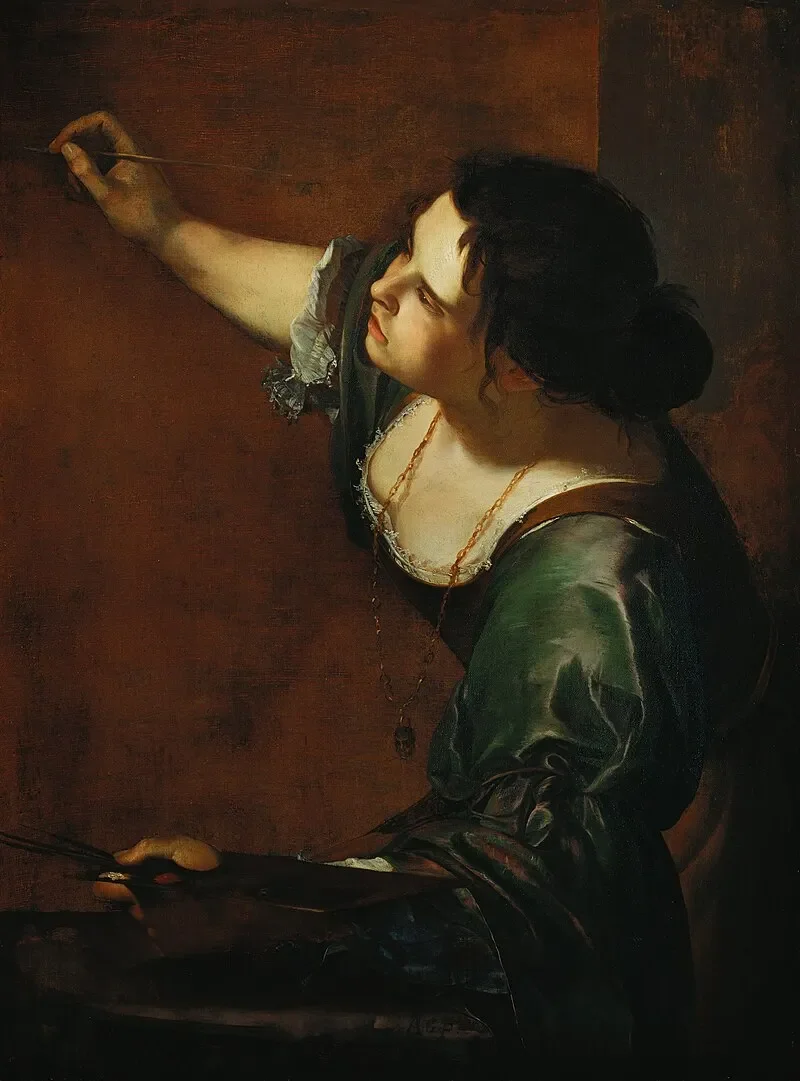
Artemisia Gentileschi (1593–1653)
Artemisia was one of the greatest 17th-century painters. She was a professional painter by the age of 15! She became the first female artist to receive membership to the Florence Academy of the Arts of Drawing in 1616. She established a successful art studio in Naples as well.
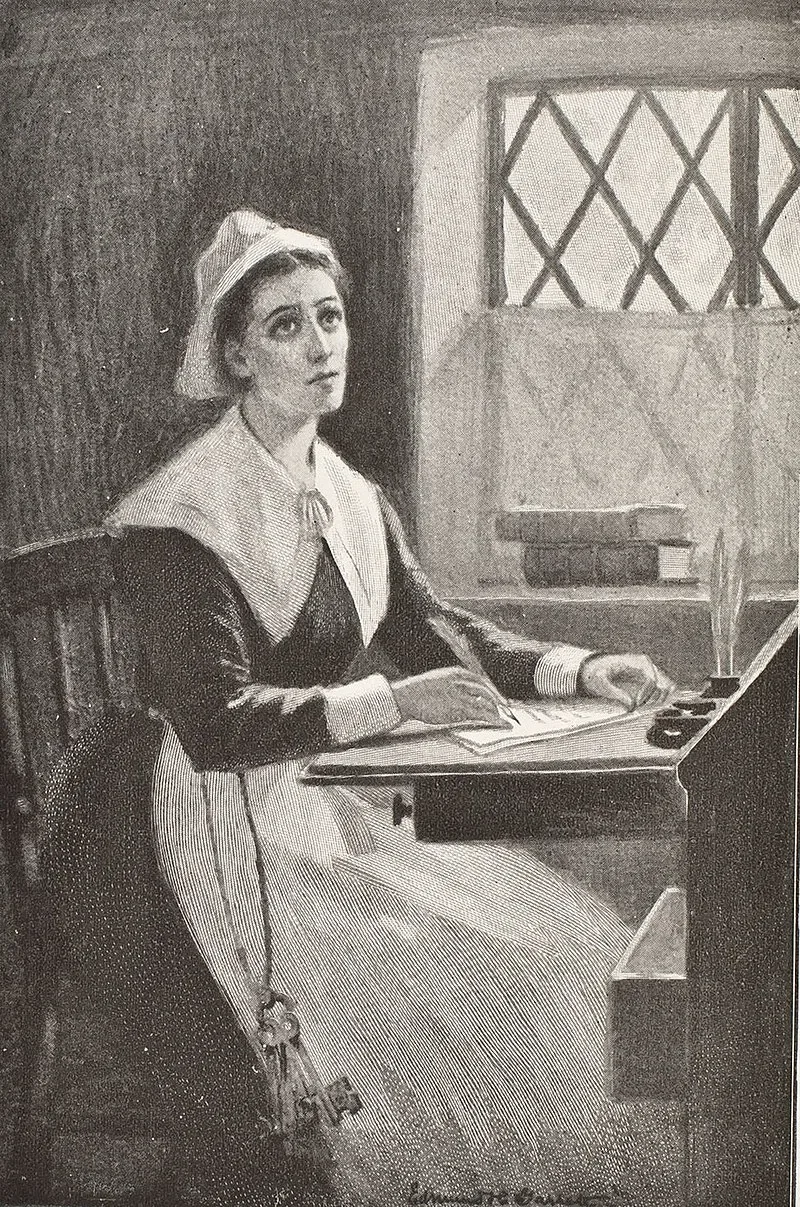
Anne Bradstreet (1612–1672)
Anne was one of the first poets to write English verse in the colonies. She wrote her poems while mothering eight children and functioning as a homemaker. Anne was ill quite a bit, but still managed to accomplish a lot. Some of her poems feature her marriage, her musings before childbirth, and her children. Anne focused a lot on her faith and her domestic life in her works. You could say she was a tradwife creator :)
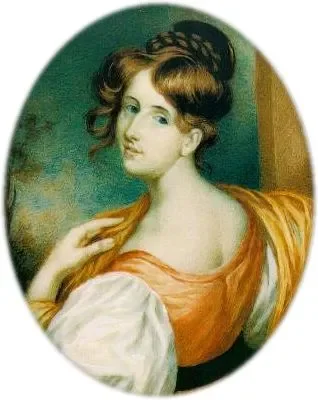
Elizabeth Gaskell (1810–1865)
Elizabeth was a writer who published, most notably, the novels Wives and Daughters, North and South, and the authorized biography of Charlotte Bronte. Family relationships are at the center of her writings. As well as writing, she engaged in social work amongst the poor in Manchester, helping young women and teaching classes. She wrote her first full-length novel to distract her from the grief of losing her aunt. Elizabeth lost her mother as a baby, and she only wrote after taking care of her family responsibilities. After her last child was born, she wrote in the evenings when all her household duties were done or whenever she found the chance.
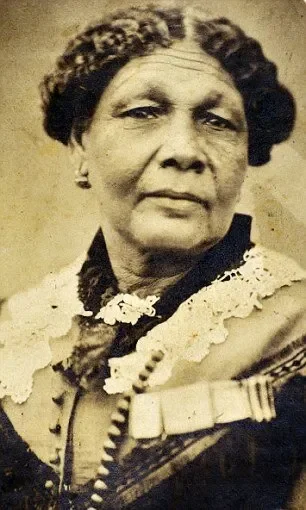
Mary Seacole (1805-1881)
Mary was a Jamaican businesswoman and nurse. She obtained knowledge of local medicines and treatments and after her husband’s death, gained further nursing experience during a cholera epidemic in Panama. She went on to assist the wounded at military hospitals in Crimea. After the war she returned to Britain destitute and bankrupt, but wrote an autobiography later that was published in 1857. Wonderful Adventures of Mrs. Seacole in Many Lands was the first autobiography written by a Black woman in Britain and it was a bestseller! She received decorations from France, England and Turkey.
So, is it traditional for women to work or have a platform?
The answer is, yes. Hopefully I have proved to you that women throughout time have always been influential to society and always worked. Was it common for women to have large platforms such as the women featured? No, it was not common, because communication was a challenge. My prior point that technology has made this more accessible for women, and for all people, stands.
As technology has changed, so have we. We as humans have always had to adapt our jobs to keep up with technology. I like to think of content creator as modern-day cottage industry.
Cottage industry noun: an industry whose labor force consists of family units or individuals working at home with their own equipment (Merriam-Webster)
I think that Anne Bradstreet or Elizabeth Gaskell in particular would definitely have been homemaking or motherhood influencers. I am sure that any of these women would take advantage of the incredible ability to communicate that modern technology gives us to further their ideas and causes. The impact that Florence Nightingale had on the world then? Imagine her with Instagram.
The women prior to now did not use social media simply because they did not have it. But they also did not have dishwashers, microwaves, automobiles, or tillers. Is it untraditional to use those?
No. Unless you’re Amish, but that’s not what tradwives are trying to emulate.
As a traditional wife, I am not seeking to reenact the past, but simply to hold onto the values and skills of the past while moving forward. Anne Bradstreet and Elizabeth Gaskell and I all share similar values, but are separated by time and technology.
The Proverbs 31 Woman from Scripture is seen as the ideal “tradwife” by me and by many in the community:
11 Her husband has full confidence in her
and lacks nothing of value.
12 She brings him good, not harm,
all the days of her life.
She is a good wife to her husband.
15 She gets up while it is still night;
she provides food for her family
and portions for her female servants.
She is a good homemaker and mistress of her household.
16 She considers a field and buys it;
out of her earnings she plants a vineyard.18 She sees that her trading is profitable,
and her lamp does not go out at night.24 She makes linen garments and sells them,
and supplies the merchants with sashes.
She is a wise businesswoman.
20 She opens her arms to the poor
and extends her hands to the needy.
She is charitable and kind.
27 She watches over the affairs of her household
and does not eat the bread of idleness.
She is industrious and productive.
30 Charm is deceptive, and beauty is fleeting;
but a woman who fears the Lord is to be praised.
31 Honor her for all that her hands have done,
and let her works bring her praise at the city gate.
She fears the Lord and is a faithful servant to Him.
I carry the blueprint of the Proverbs 31 woman in my heart as I seek to be a traditional wife, but more than I seek to be traditional, I seek to be Biblical. As a Christian my traditions are rooted in Scripture, not man. There may be traditional wives who disagree with me, but I hope this article has shown that there is more nuance to “trad” than we think. Nothing is as black and white as the internet makes it out to be, and it is worthwhile to remember that.