
Building a Stocked Pantry to Save on Groceries
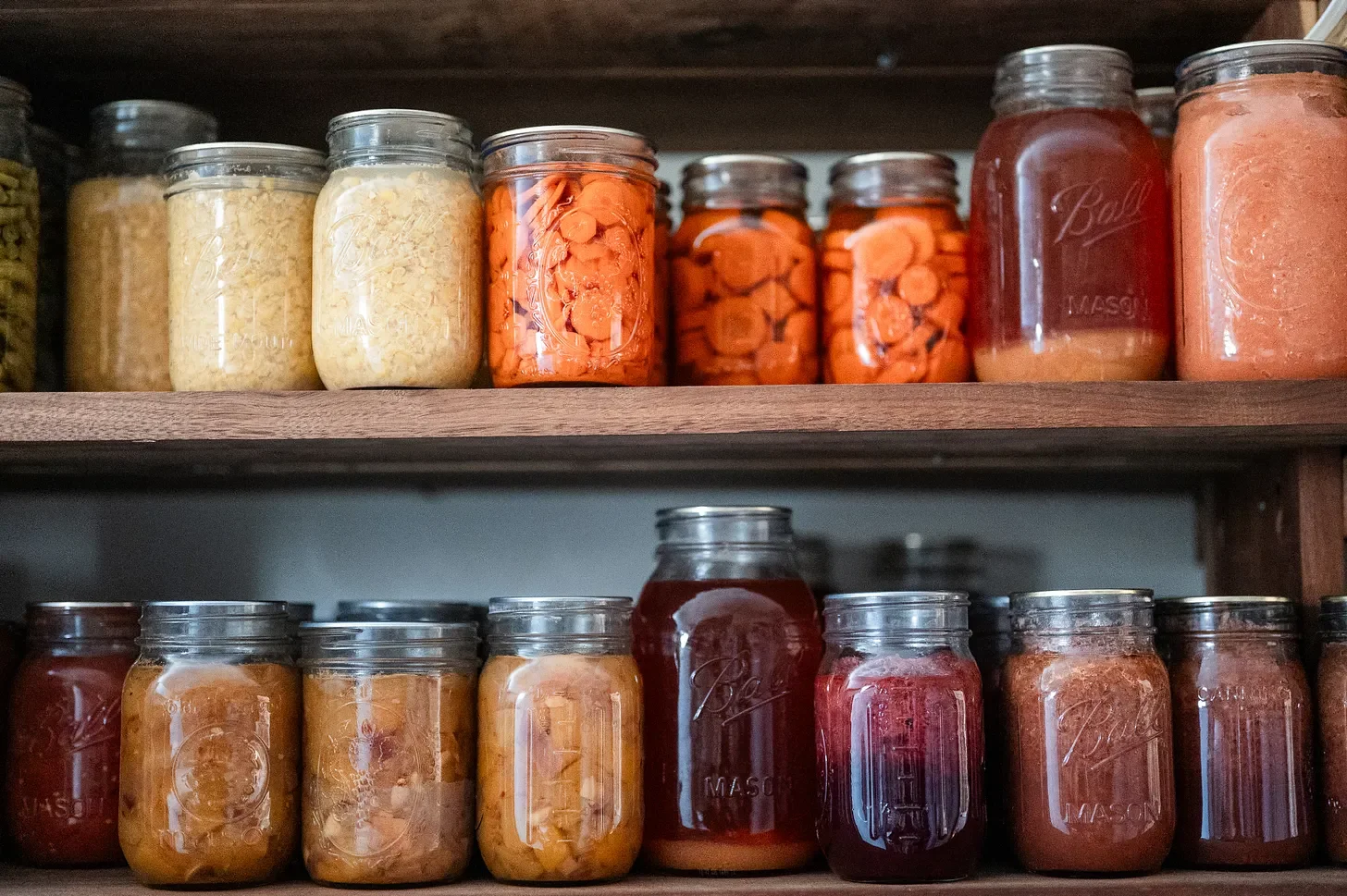
I order groceries once a month. I place an order with Azure Standard to restock the items I am getting low in or ran out of in my pantry. The rest of the month I just do weekly milk runs.
This has saved us SO MUCH money by not having to grocery shop weekly. It saves time, gas, keeps me from impulse purchases, and also gives me food security knowing that I have several month’s worth of food in my pantry.
Why you should have a stocked pantry
You don’t have to be a “prepper” to have a fully stocked pantry. Honestly I think this is an important strategy for most people. There are many ways you can benefit from having a month or more of food on hand:
Illness/injuries, getting laid off - What if you or your spouse gets injured or laid off and can’t work for a month or longer? Would you have the money to buy food? You already have to pay bills. Can you imagine the relief of knowing you have one less thing to worry about?
Security against inflation - Our money is worth less and less just sitting in a bank account (not that many of us have that much money sitting around, but still). Food prices are continually going up - I’ve personally seen coconut oil jump from less than $20 a gallon to over $40 in a year. Providing you are stocking staples that don’t expire quickly, this is an excellent way to provide against inflation.
Being generous with others - Have you known others going through a hard time that could use a meal or pantry staples themselves? It can be hard to give when we are struggling ourselves. I know that, while I may not have the money to run out and buy ingredients to make a few meals for a family in need right now, I have everything I need in my pantry to do that without causing financial hardship.
Natural disasters and weather - No more running to the grocery store before a snowstorm to stock up, finding no bread and milk left. Or what if you get flooded in like those affected by hurricane Helene? Supply lines can be cut off as well.
Not depending on a store brings such peace of mind and helps you be able to better provide for yourself and those around you!
How do I start?
Well that’s where I come in! I’ve provided a list of things I personally keep in my pantry as a guideline for you. Don’t run out and buy everything at once - instead, I encourage you to keep track of your grocery lists for a month and think over your most common meals to make. Simplify things down to what your family uses.
For example, we eat a lot of beef, a lot of creamy pasta dishes. That means I stock a lot of pasta, beef, cream cheese and sour cream. But for a dairy free or gluten free family that would look a lot different. It really depends on your diet and eating habits.
Be sure to only stock what you actually use. Don’t run to Costco and buy a bunch of random things you won’t actually eat just because they are a good price. Do you eat rice at least once a week? Buy a 50lb bag of rice.
Wondering how to afford buying in bulk? You have to start slow. Most of us can’t just run to Costco or Azure and buy 50lb bags of all the pantry staples. Even now I usually just buy one at a time. Azure is a pretty easy way to gradually start buying more bulk as you can buy items by ones and twos instead of by cases and they often run sales on their items. Take advantage of sales and try to skimp a bit to start putting money away for larger purchases.
Today I’m going to walk you through items I stock in my pantry, about how often I replenish several of them, and follow up soon with an article about meals I plan from my pantry.
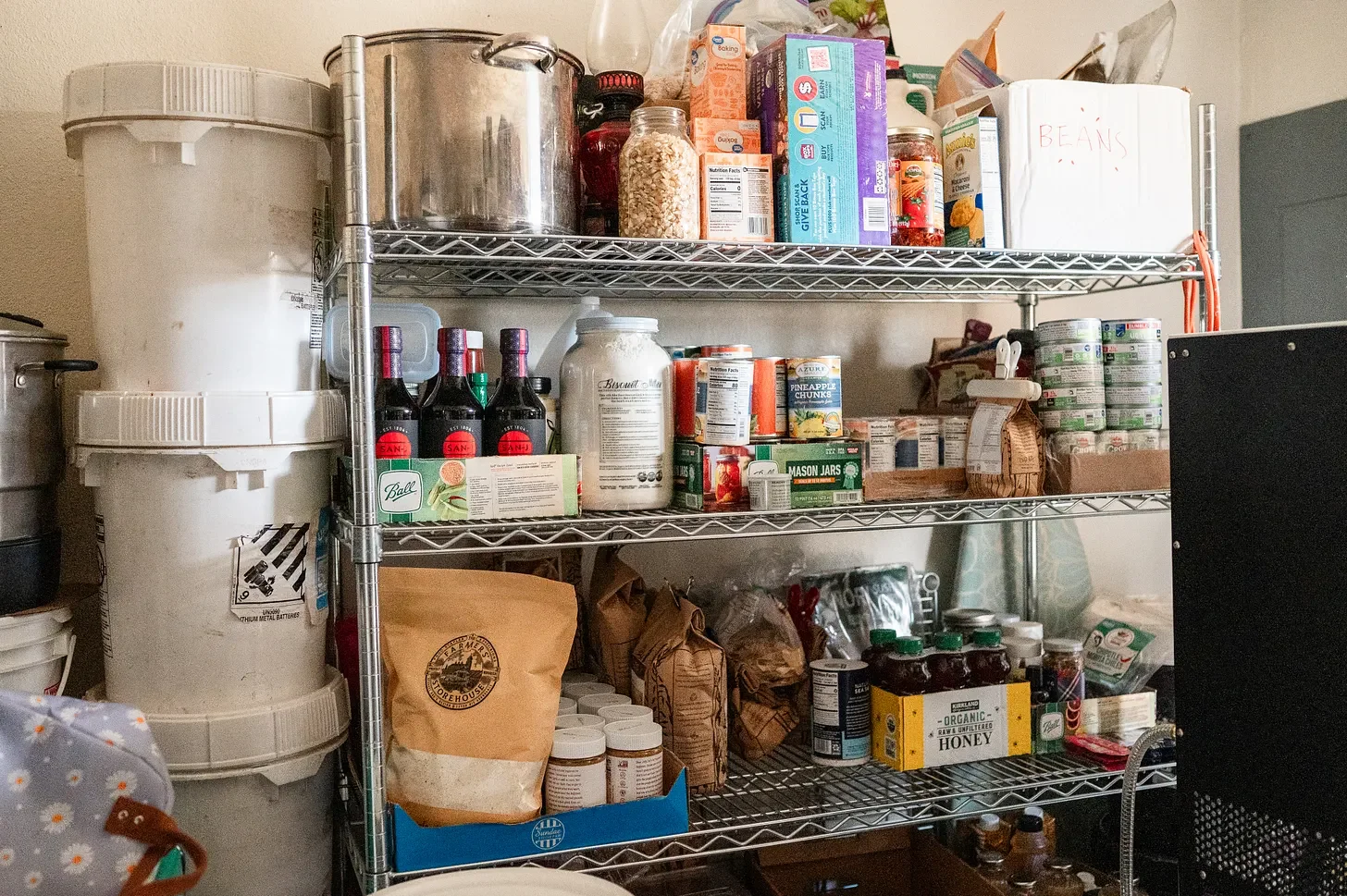
a shelf of food in my pantry
What I keep in my pantry
Meat
We buy our beef and pork by the whole cow and whole hog. It’s more cost effective this way and extremely convenient to have multiple cuts of meat in our freezer whenever we want them. At all times I usually have:
ground beef
ground pork
sausage
steaks (sirloin, t-bone)
brisket
stew meat
chuck roast, arm roast, sirloin roast
pork chops
pork roasts
bratwurst
bacon
whole chickens
A good place to start if you don’t want to buy your meat by the animal would be a month’s worth of meat for your family. The most common cuts I use are
ground beef
sausage
stew meat
roasts
whole chickens
To determine how much your family goes through in a month, think about how much you use when you cook and how often. For me, I KNOW we go through one chicken a week and about 1/4lb of meat per person per serving. For us that’s 1lb meat per day. So for a month of meat for us it would be 4-5 chickens and about 22-25lbs of beef and pork. If you’re not buying by the animal, meat can be expensive, so maybe just buy a few extra pounds per week until you have your freezer stocked. I highly recommend starting a savings account to save for bulk meat purchases like half a cow. Right now we save around $250 a month for meat.
Dairy
Dairy is our next most-used category. We are HUGE on dairy products, they just make food so filling I think. Every month I am usually restocking some product or another. I usually buy a 6-pack of sour cream and a 6-pack of cream cheese at a time from Azure. These last us about 2-3 months if I’m good at meal planning! I use about one container of cream cheese OR sour cream per week, and these can usually be substituted for each other if I’m running low.
I buy my cheese by the 5lb block from Azure as well and always keep at least 1 gallon bag of shredded cheese in the freezer. I use cheddar the most but I also keep some mozz and parmesan on hand in smaller categories. Cheese is expensive so I try to be frugal with it. I go through a 5lb block every 4 months or so. Butter I buy by the 12-pack (12 lbs) and I go through that every 6 months.
So in my fridge and freezer I keep
milk (bought weekly from the Amish)
yogurt (made from home weekly)
sour cream
cream cheese
cheddar cheese
parmesan cheese
mozzerella cheese
butter (always keep a good amount of this in the freezer)
Fats, oils, vinegars
I keep several of these on hand. Pretty self-explanatory but they are very helpful to have for different recipes!
plant oils:
olive oil
coconut oil
avocado oil
sesame oil
animal fats
lard
tallow
apple cider vinegar
white vinegar
small containers of these vinegars:
white wine and red wine vinegar
balsamic vinegar
rice wine vinegar
Dry goods
This is where it gets very busy. I’ll talk more about how I separate out my meals later, but I usually have a carb with every meal. These all help make that possible.
multiple kinds of pasta
spaghetti/angel hair
bow tie
penne
elbow macaroni
rice
white rice
sushi rice
quinoa (only because I got a great deal on it, lol!)
beans
black beans
navy beans or pinto beans
smaller quantities of:
lentils
chickpeas
flour and wheat berries
all purpose flour (used the most and bought by the 25lb bag)
hard red wheat (for feeding my sourdough starter)
other grains
corn grits
oats
cornmeal
sugars
cane sugar
molasses
brown sugar
coconut sugar
maple syrup
honey
leavening agents:
baking powder
baking soda
yeast
other baking essentials like:
cornstarch
cocoa powder
gelatin
vanilla
dried fruits and nuts
peanut butter
raisins
sun-dried tomatoes
other nuts and dried fruits in small quantities because they are expensive
Home canned goods
This is where the home pantry shines. I actually wrote an ebook about canning because it’s something I’ve been doing for 12 years and it’s essential to my family. If you don’t can, you can swap these out for store-bought, of course. We buy up or grow fresh produce in the summer and can so that we have veggies that are out of season in the wintertime. Here’s what is usually on my shelf:
tomato products
pasta sauce
pureed tomatoes (for soups!)
chunked tomatoes or whole tomatoes
salsa
apple products
applesauce
apple pie filling
jams
veggies
green beans
carrots
corn
black beans
chicken broth
beef broth
Seasonings and condiments
These are so important for making your food interesting!
mustard
worcestershire sauce
ketchup
mayonnaise
essential spices:
salt and pepper
chili powder
cumin
oregano
thyme
paprika
italian seasoning
garlic powder
onion powder
mustard powder
dill
turmeric
cinnamon
nutmeg
allspice
cloves
Vegetables
Last but not least, I keep a few veggies on hand that store well. Mainly root vegetables. These keep really well in cool, dark storage.
potatoes (50lbs at a time, keeps for 3-4 months in the fridge)
carrots (10lbs, keeps for 2 months in the fridge)
onions (10lbs a month)
garlic (3lbs a month)
winter squashes
sweet potatoes
apples (20lbs, keeps for a month in the fridge)
And that is my pantry!
Please consider subscribing to get the other articles in this series! We have just begun!